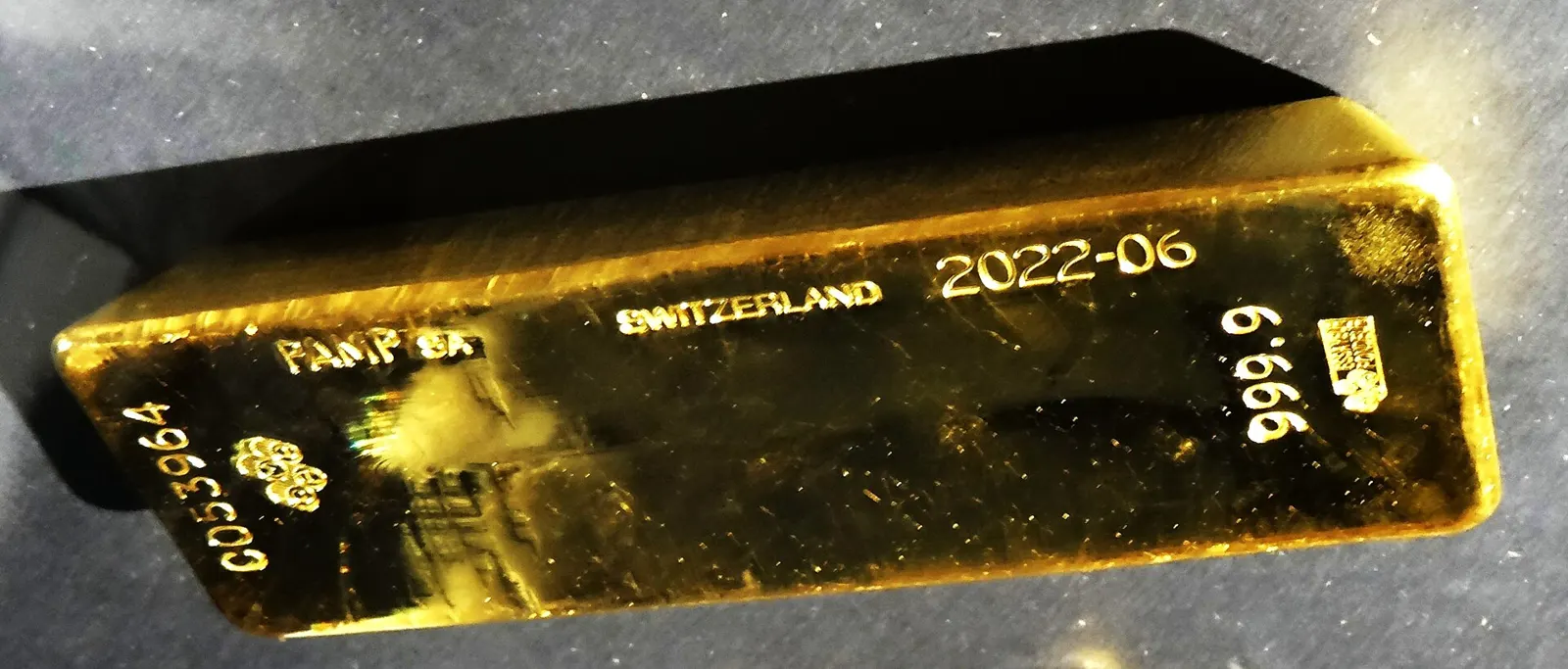
Short answer: There are four main ways to invest in gold: owning bullion, buying a fund that holds bullion, buying shares in gold mining companies, or buying shares in royalty and streaming companies. Bullion follows the gold price. Miners amplify it, in both directions. Royalty companies sit somewhere in between, with less operating risk than a miner.
This article is for information only. It is not investment advice, and nothing here is a recommendation to buy or sell any security or product. Gold and gold shares can fall sharply in value. Do your own research and, if you need advice, speak to a qualified adviser.
Why people own gold
Gold pays no interest and no dividend. Its value rests on something older and harder to measure: the belief, shared across cultures and centuries, that it will still be worth something when other assets are not. Central banks hold it in their reserves, jewellery buyers in India and China absorb huge quantities every year, and investors reach for it when they are worried about inflation, currencies, debt or war.
That makes the gold price respond to forces that have little to do with mining. Interest rates matter most: when real rates rise, holding an asset that pays nothing becomes more expensive, and gold tends to suffer. The US dollar matters too, because gold is priced in dollars. And sentiment matters a great deal, which is why gold can move fast in either direction.
2026 has shown both sides. Gold began the year on a run that took it towards $5,400 an ounce. By the end of October, according to MINING.COM’s monthly review of the sector, it had closed the month at about $3,884, its first month-end close below $4,000 since September 2025, after its worst October since 2008. Anyone buying gold should be ready for swings of that size.
Owning the metal itself
The most direct way to own gold is to buy it: bars or coins from a reputable dealer or mint.
What you get. Exposure to the gold price and nothing else. There is no company, no management and no counterparty, provided you hold the metal yourself or through a properly segregated vault.
What it costs. Physical gold is sold at a premium over the spot price, and bought back at a discount to it. The gap is widest on small bars and collectable coins, and narrowest on larger bars and widely traded bullion coins. On top of that come storage and insurance, either at home or in a vault.
What to watch. Buy from established dealers, keep records of what you paid, and check how your country taxes gains on gold. Some countries treat certain coins differently from bars, and the difference can be significant.
Physical gold suits investors who want the metal as insurance and are prepared to hold it for years. It suits traders less well, because the dealing costs eat into short-term gains.
Gold funds
Exchange-traded funds and similar products that hold physical gold let you buy and sell gold exposure through an ordinary brokerage account. Each share or unit represents a fraction of the gold the fund holds in a vault.
What you get. Close tracking of the gold price, easy dealing and no storage worries of your own.
What it costs. An annual management fee, usually a fraction of a per cent, which quietly reduces your holding over time, plus normal dealing costs.
What to watch. Not every product is what it seems. Check that the fund actually holds physical metal rather than futures or derivatives, where the gold is stored, and how the product is structured legally. In some markets these products are sold as exchange-traded commodities rather than funds, with different protections.
For most people who simply want the gold price in their portfolio, a physically backed fund is the cheapest and simplest route. It is the benchmark against which every other way of owning gold should be judged.
Gold mining stocks
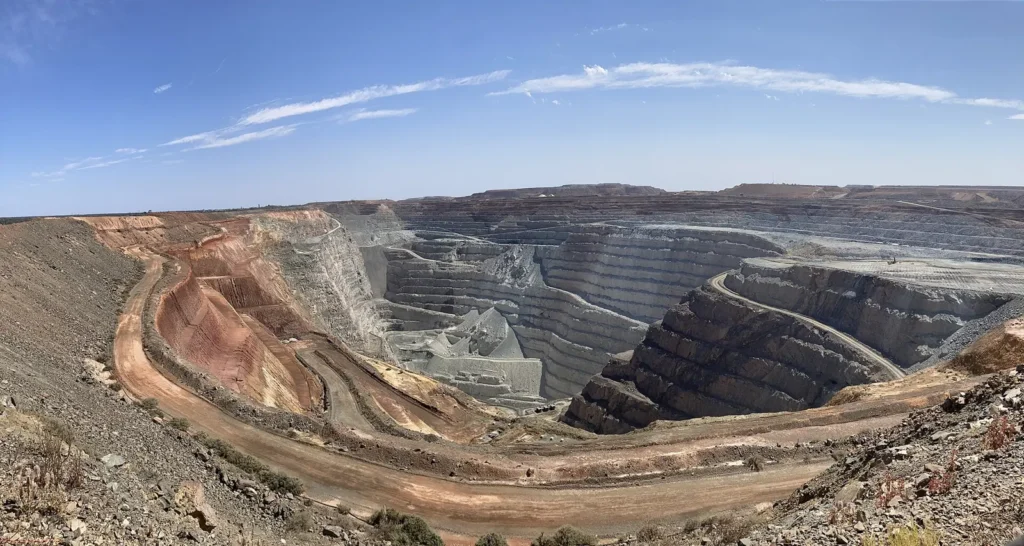
Buying shares in gold miners is a very different proposition. You are no longer buying gold. You are buying a business that digs it up, with all the costs, risks and management decisions that involves. If you are new to mining shares in general, our guide to mining stocks covers the basics.
Why miners move more than gold
A mine’s costs are largely fixed in the short term, so changes in the gold price fall almost straight through to profit. Take a hypothetical mine that produces gold at an all-in cost of $2,000 an ounce. At a gold price of $4,000, it earns a margin of $2,000 an ounce. If gold rises 10% to $4,400, the margin rises to $2,400, a 20% increase. If gold falls 10% to $3,600, the margin falls by 20%. That leverage is the whole attraction of gold miners, and also their main danger.
All-in sustaining cost
The single most useful number in a gold miner’s accounts is its all-in sustaining cost, or AISC: what it costs to produce an ounce of gold and keep the mine running at its current rate. The World Gold Council introduced the measure in 2013, and it has been widely adopted by gold mining companies as part of their reporting. It includes site costs, royalties, sustaining capital, corporate overheads and the cost of rehabilitating mined land.
AISC is not perfect. Companies apply the guidance with some discretion, and it excludes the cost of building new mines. But the gap between a company’s AISC and the gold price is the best quick measure of how much room it has when prices fall. We look at how the number is built, and what else decides whether an ounce is profitable, in Gold Mining Economics: What Makes an Ounce Profitable?.
What else to look at
- Reserves and mine life. A mine is a depleting asset. How many years of production are left, and is the company replacing what it digs?
- Jurisdiction. A low-cost mine in an unstable country can be worth less than a higher-cost mine in a stable one.
- Concentration. A company with one mine carries far more risk than one with ten.
- Balance sheet. Debt magnifies the leverage described above.
- Hedging. Some miners sell part of their future production in advance, which protects them if prices fall but caps their gains if prices rise.
What the market pays for an ounce
One useful way to compare gold miners is to look at what the market pays for each ounce they produce in a year. In its August 2026 review, MINING.COM calculated that investors were paying about $30,000 for every annual ounce at Agnico Eagle and $23,700 at Newmont, while Russia’s Polyus traded at a fraction of that. The difference reflects jurisdiction, costs, growth and confidence in management, and it shows how much of a gold miner’s value has little to do with the gold itself.
Majors and juniors
Large producers offer the leverage described above with some diversification across mines and countries. Smaller explorers and developers offer much greater upside and much greater risk, because their value rests on gold that has not yet been mined and, in many cases, may never be. We look at that end of the market in Junior Mining: How to Invest in Junior Mining Stocks.
Royalty and streaming companies
Royalty and streaming companies do not operate mines. They provide money to miners, usually to help build or expand a mine, in exchange for a share of its future output.
- A royalty entitles the holder to a percentage of a mine’s revenue or production.
- A stream gives the holder the right to buy a fixed share of a mine’s output, often gold or silver produced as a by-product, at a fixed price well below the market price.
The largest of these companies, such as Franco-Nevada, Wheaton Precious Metals and Royal Gold, hold interests in dozens of mines around the world.
What you get. Exposure to the gold price with little of the operating risk. Royalty companies do not pay for cost overruns, strikes or rising fuel prices at the mines they finance. They keep most of the upside when the gold price rises, and they also benefit when the mine operator finds more gold, at no extra cost to them.
What to watch. They still depend on the mines performing, and a single large problem asset can hurt. They usually trade at higher valuations than miners, so investors pay up for their relative calm. And because they hold many small interests, their results can be harder to analyse than a simple mining company’s.
The four routes side by side
| Bullion | Gold fund | Mining shares | Royalty companies | |
|---|---|---|---|---|
| Follows the gold price | Directly | Directly | With leverage | Partly, with some leverage |
| Main costs | Dealer spread, storage | Annual fee | Company risk | Higher valuations |
| Pays an income | No | No | Sometimes | Usually |
| Operating risk | None | None | High | Low to moderate |
| Main risk beyond gold | Theft, dealer quality | Product structure | Costs, politics, management | Problem assets |
Common mistakes
Buying miners as a substitute for gold. Gold miners are not gold. Over long periods, many have done worse than the metal, because rising costs, poor acquisitions and dilution ate up the benefit of higher prices. Compare any miner you hold with the gold price over a full cycle.
Ignoring costs. A rising gold price is no help to a miner whose costs are rising faster. Read the AISC trend, not just the latest number.
Paying too much for bullion. Small bars and novelty coins often carry premiums that take years of price gains to recover.
Treating gold as a short-term trade. Gold can go years without making progress, and then move sharply in weeks. Most people who own it do so as long-term insurance, not as a bet on next month’s price.
Frequently asked questions
What is the simplest way to invest in gold?
For most investors, a fund that holds physical gold is the simplest and cheapest route. It tracks the price closely, can be bought through an ordinary brokerage account and avoids the costs of storing metal yourself.
Are gold mining stocks better than gold?
Not necessarily. They can rise much faster than gold in a rising market, because their profits are leveraged to the price, but they can also fall much faster, and they carry company risks that gold does not. Many have underperformed the metal over long periods.
What is AISC in gold mining?
All-in sustaining cost is a measure, set out by the World Gold Council, of what it costs a company to produce an ounce of gold and keep its mines running at their current rate. It includes site costs, sustaining capital, royalties and overheads, but not the cost of building new mines.
How do gold royalty companies make money?
They provide finance to mining companies in return for a percentage of a mine’s revenue or the right to buy part of its output at a fixed, low price. They then sell that gold at the market price. Because they do not run the mines, they avoid most of the operating costs and risks.
Does gold pay dividends?
Gold itself does not. Some gold miners and most of the larger royalty companies pay dividends, but miners’ payouts often rise and fall with the gold price.