
Short answer: Mining stocks are shares in companies that find, develop or extract metals and minerals. They range from giant diversified producers to tiny explorers with one drill target. Their prices follow commodity prices, but also geology, permits, politics and the company’s ability to raise money, which is why they behave unlike almost any other part of the market.
This guide is for information only. It is not investment advice, and nothing here is a recommendation to buy or sell any security. Mining shares can lose most or all of their value. Do your own research and, if you need advice, speak to a qualified adviser.
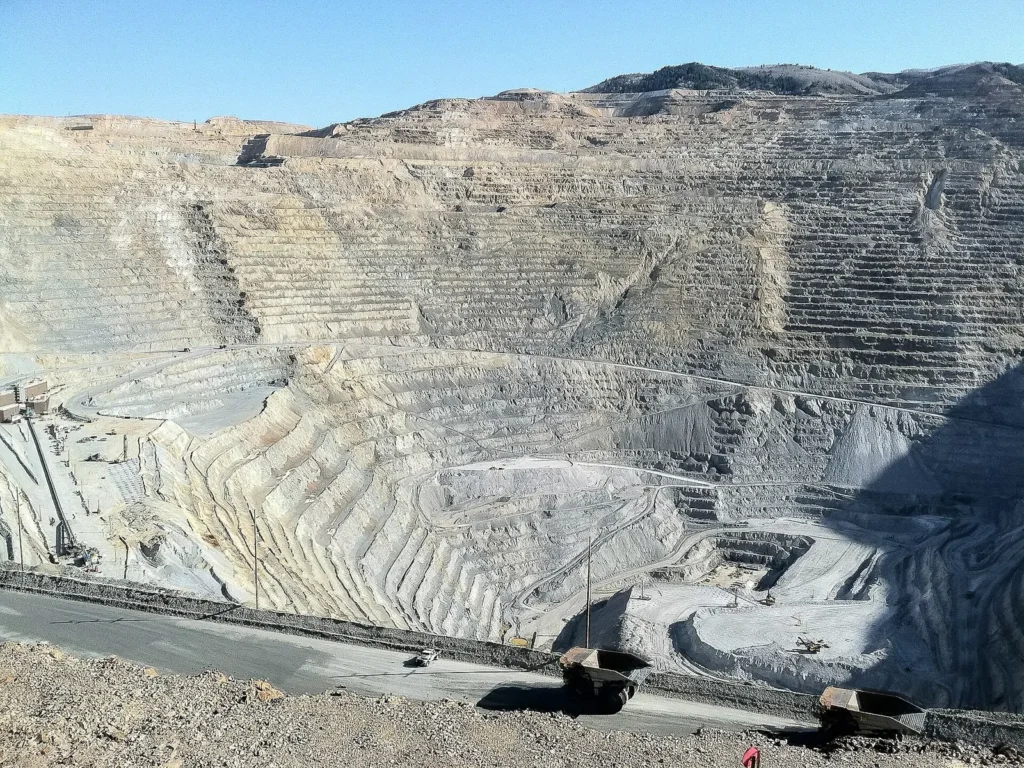
What counts as a mining stock
The simplest definition is a company whose value depends on getting something out of the ground. The index providers draw the line more precisely. Under the classification system used by MSCI and S&P, the Materials sector includes metals, minerals and mining companies, including producers of steel, while oil, gas and coal sit in the Energy sector.
That split explains a few oddities: a coal miner or a uranium producer may turn up in an energy fund rather than a mining one. Oil companies, often lumped together with miners in conversation, follow a different business model with different metrics. On this site we leave oil and gas aside and stay with what is dug, not pumped.
Within mining, the useful distinctions are what a company produces and what stage it has reached. The second matters more. A gold producer and a gold explorer may both call themselves gold companies, but one is selling metal and the other is selling hope.
Where mining companies list
If you start looking at mining shares, you will spend a lot of time on Canadian exchanges. According to TMX Group, roughly 40% of the world’s public mining companies are listed on the Toronto Stock Exchange and the TSX Venture Exchange, and those companies completed 45% of all global mining financings in the past five years.
The pattern is roughly this. The largest producers tend to be listed in London, Sydney, New York or Toronto, often on more than one of them. The smaller explorers cluster on the TSX Venture Exchange in Canada and on the ASX in Australia, with a smaller group on London’s AIM. Many have their offices in Vancouver, Toronto or Perth and their projects on another continent entirely.
For the investor this matters. Disclosure rules differ by country, and a company one broker offers may be out of reach through another. It is worth checking how much of a company’s stock changes hands on a normal day: a thinly traded explorer can be easy to buy and very hard to sell.
The life of a mine, and the shares that follow it
Every mine follows roughly the same path, and the share price tends to follow it too.
Exploration. Geologists map, sample and drill. Most targets fail. A company at this stage has no revenue and spends its cash on drilling, so it needs to raise money again and again. Results arrive as press releases, and a single good drill hole can move the shares more than a year of patient work.
Resource definition. If drilling finds something, the company drills more to estimate how much is there. This produces a mineral resource estimate, the first formal statement of what the deposit might contain.
Studies. Engineers then ask whether the deposit can be mined at a profit. A preliminary economic assessment comes first, then a pre-feasibility study, then a full feasibility study. Each one is more detailed and more expensive, and each one can kill the project.
Development. If the numbers work, the company needs permits, financing and years of construction. This is where many projects stall, and where shareholders are often diluted heavily as the company raises the hundreds of millions, sometimes billions, that a mine costs.
Production. The mine finally sells metal. Now the company has revenue, costs and margins, and it starts to be valued on cash flow rather than on promise.
Closure. Every mine runs out. Producers must keep replacing what they dig up, either by exploring around existing mines or by buying other companies.
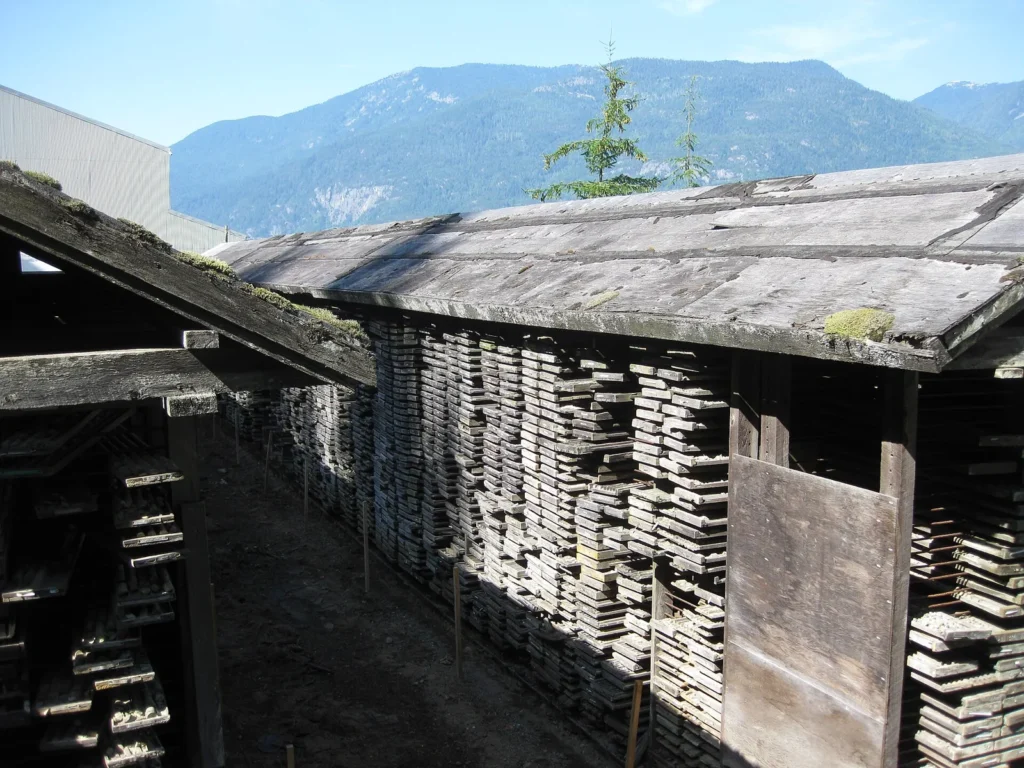
Share prices tend to follow a familiar pattern along this path: a rise on discovery, a long fade through the costly study and permitting years, and a recovery if the mine is built and works. Knowing where a company sits on that curve prevents many expensive mistakes.
Much of the early part of this path is financed in a particular way, through private placements of units that combine shares and warrants. We look at how those deals work, and what they mean for existing shareholders, in Junior Mining Private Placements: Units and Warrants.
Majors, mid-tiers and juniors
People in the industry sort mining companies into three rough groups.
Majors are the large, diversified producers with several mines, often on several continents, producing more than one commodity. They pay dividends in good years, have access to cheap capital and can survive a bad cycle. Their shares move with commodity prices but rarely collapse on a single piece of bad news. We list them in The Largest Listed Mining Companies in the World.
Mid-tiers usually have one to a handful of producing mines, often in a single commodity. They carry more concentrated risk: one flooded pit, one strike or one change of government can hurt them badly. They are also the companies most likely to be bought by a major, or to buy a promising junior themselves.
Juniors are explorers and developers with no production. Almost all of them will never build a mine. A few will find something worth selling to a bigger company, and a very few will become producers themselves. Owning juniors is less like investing in a business and more like backing a team on a long expedition. We cover that world in detail in Junior Mining: How to Invest in Junior Mining Stocks.
Reading the paperwork
Mining is one of the few sectors where the most important document is written by a geologist rather than an accountant. That document is the technical report.
In Canada, the rules are set by National Instrument 43-101. According to the Canadian Institute of Mining, Metallurgy and Petroleum, disclosure about mineral projects must be based on information provided by a “qualified person”, and companies must file a technical report in a prescribed format at certain times. The rule came into force in 2001, a few years after the Bre-X scandal had shown how much damage unverified claims could do. Australia uses the JORC Code, and the United States uses the SEC’s S-K 1300 rules. They differ in detail but share the same basic ideas.
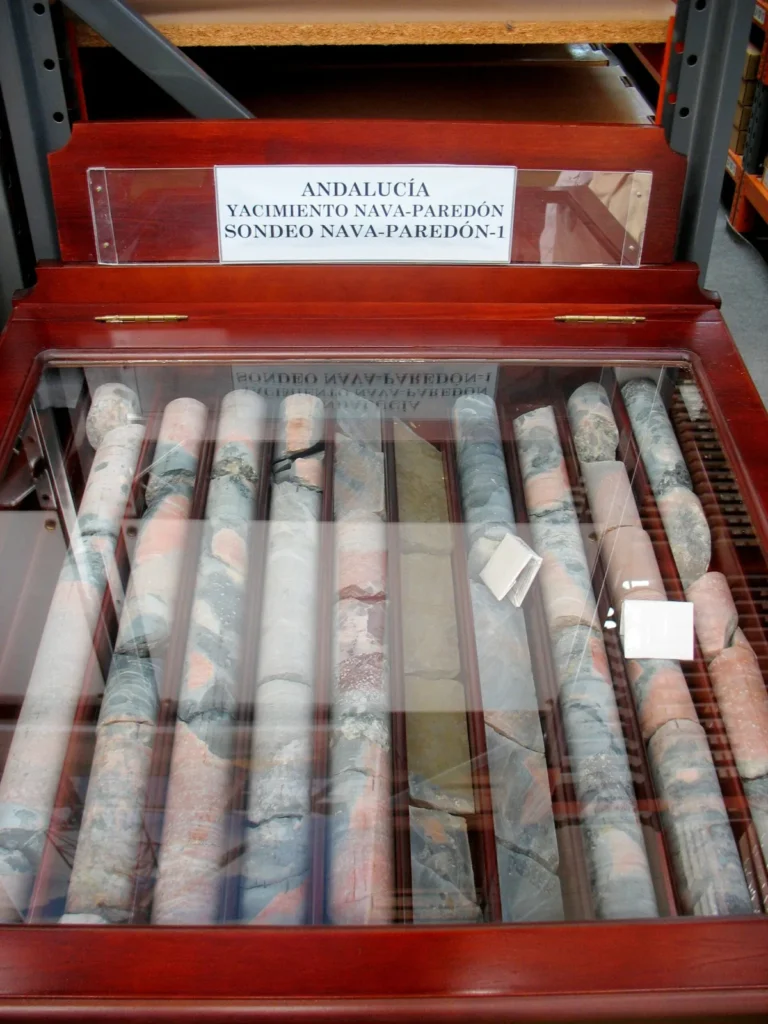
The single most important distinction in any of these reports is between resources and reserves.
- A mineral resource is mineralised material with reasonable prospects of eventually being mined. Resources are split into inferred, indicated and measured, in order of rising confidence. Inferred resources are little more than an educated estimate.
- A mineral reserve is the part of a resource that has been shown, through at least a pre-feasibility study, to be economically mineable under stated assumptions about prices and costs.
Many promotional presentations blur this line, adding all categories together into a single impressive figure. A careful reader separates them and asks what metal price the estimate assumes. We go through a real report section by section in NI 43-101: How to Read a Mining Technical Report.
Ways into the sector
There are four broad ways to gain exposure to mining.
Individual shares. The most direct route, and the one that demands the most work. You take on the company’s geology, management, jurisdiction and balance sheet as well as the commodity price.
Funds and ETFs. A mining ETF spreads the risk across many companies. Some track the whole sector, some a single metal, and some focus on juniors. The details matter more than the label: what the fund holds, how concentrated it is, and what it costs. See Mining ETFs: What to Know Before You Buy.
Royalty and streaming companies. These companies do not run mines. They provide money to miners in exchange for a percentage of future revenue, or the right to buy part of the output at a fixed price. They avoid most of the operating risk and keep much of the upside, which is why many investors see them as the calmest way into precious metals.
Physical metal. For gold and silver, you can own the metal itself, through bars, coins or vehicles that hold bullion. It is not a mining investment, but it is the benchmark every gold or silver mining share should be compared with. If a miner does not beat the metal over a full cycle, there was little point in taking on its extra risks. We compare these routes in How to Invest in Gold: Bullion, Miners and Royalties and How to Invest in Silver: Bullion and Mining Stocks.
The cycle that rules everything
Mining is a cyclical business with very long lead times. When prices rise, companies decide to build new mines. Those mines take five, ten or more years to arrive. By the time they start producing, demand may have cooled, supply floods in, and prices fall. Low prices then discourage new investment, supply tightens again, and the cycle repeats.
Mining shares exaggerate these swings. A producer’s costs are largely fixed, so a modest rise in the metal price can multiply its profits, and a modest fall can wipe them out. Explorers swing even harder, because their ability to raise money depends on the mood of the market. In a strong cycle, almost any junior can finance itself. In a weak one, good projects starve.
Every so often, a long and unusually strong upswing, driven by a large new source of demand, earns the label of a commodity supercycle. Whether a given rally is one of those, or just an ordinary upturn, is usually clear only afterwards. We look at the history and the warning signs in The Mining Stocks Cycle and the Commodity Supercycle.
The cycle also explains why mining dividends behave differently from those in steadier sectors. Many large miners now link their payouts to profits, which means generous dividends in good years and sharp cuts in bad ones. That is one reason why the long, unbroken records of dividend growth found elsewhere are so hard to match in mining, a question we explore in Why No Mining Company Is a Dividend King.
Commodities with their own rules
Some commodities play by rules of their own, and each deserves separate treatment.
Gold is held as a store of value as much as it is used, so its price responds to interest rates, currencies and fear more than to industrial demand. Gold miners are judged above all on what it costs them to produce an ounce.
Silver is part precious metal and part industrial input. Most silver is produced as a by-product of mining other metals, which means supply does not respond much to the silver price, and true silver-focused miners are relatively few.
Uranium is sold mostly through long-term contracts with utilities rather than on an open market, so the price investors see tells only part of the story. Supply is concentrated in a small number of countries and companies.
Diamonds have no transparent public price, every stone is different, and laboratory-grown diamonds have changed the market for many categories of stone. There are few listed companies focused purely on diamonds.
Rare earths are less rare than their name suggests. The bottleneck is processing and separation rather than mining, and that stage is dominated by China, which makes the sector as much about policy as about geology.
Each has its own guide on this site, starting with How to Invest in Gold: Bullion, Miners and Royalties, Uranium Stocks: How to Invest in Uranium, Diamond Stocks: How to Invest in Diamonds and Rare Earth Stocks: How to Invest in Rare Earths.
What goes wrong
Mining failures tend to come from a short list of causes.
- Geology. The deposit turns out smaller, lower grade or harder to process than the early drilling suggested.
- Costs. Construction runs over budget, or operating costs rise faster than the metal price.
- Jurisdiction. A government raises royalties, changes ownership rules, delays permits or, in the worst cases, takes the mine.
- Financing. The company cannot raise money on acceptable terms and either dilutes shareholders heavily or stalls.
- Fraud. Rare, but devastating. The Bre-X affair in the 1990s, built on salted samples from a supposed giant gold deposit in Indonesia, wiped out billions of dollars of market value and changed the rules for the whole industry.
The sector’s history is full of spectacular rises and falls, and a handful are worth knowing by name. On the way up, Diamond Fields Resources, a small explorer looking for diamonds in Labrador, stumbled on the Voisey’s Bay nickel deposit in the 1990s and was bought by Inco for billions within a few years. On the way down, Bre-X is the classic warning, but even the largest companies are not immune: Glencore’s shares collapsed in 2015 as commodity prices fell and investors worried about its debt, and Vale lost a large part of its market value in a single day after the Brumadinho tailings dam disaster in 2019. And some of the worst losses came from deals rather than mines, such as Rio Tinto’s purchase of Alcan in 2007, near the top of the cycle, followed by years of write-downs.
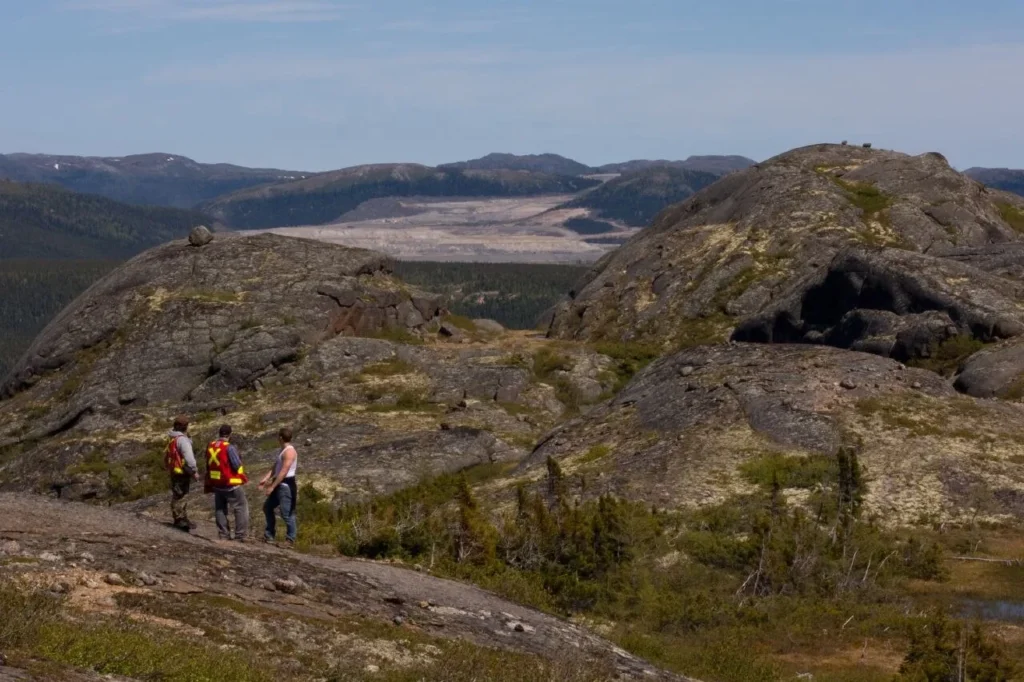
What these stories share is that the share price moved far more than the underlying commodity. We tell them in full, with the numbers, in Famous Mining Stock Successes and Failures.
Frequently asked questions
Are mining stocks a good investment?
They can be, but they are among the most volatile shares on the market, and they usually move further than the commodity itself in both directions. Whether they suit you depends on your time horizon and your tolerance for large swings.
What is the difference between a mining stock and a commodity?
Owning a commodity, such as gold bullion, gives you exposure only to its price. Owning a mining share adds the company’s own risks and rewards: its costs, management, debt, jurisdiction and ability to grow. A good miner can outperform the metal; a poor one can fall even while the metal rises.
Why do junior mining shares move so much?
Because their value rests on a small number of uncertain events, such as drill results, study outcomes or financings. Their share registers are often small and thinly traded, so modest buying or selling can move the price sharply in either direction.
What is a qualified person in mining?
Under Canadian rules, a qualified person is a professional, usually a geologist or mining engineer, with relevant experience, who prepares or supervises the scientific and technical information a company discloses about its projects. Their sign-off is meant to give investors some assurance that the numbers have been checked by someone accountable.
Are royalty companies safer than miners?
They avoid most of the operating and construction risk, because they do not run mines themselves. They still depend on the mines they finance performing well, and on the commodity price. Safer is relative: they are generally steadier than producers, but they are not risk-free.