Short answer: China dominates rare earths not just because it has large deposits, but because over decades it built the whole supply chain: mining, chemical separation, refining, metal making and magnet manufacturing. Separation is the real bottleneck. New mines elsewhere help only if separation plants, metal production and magnet factories are built alongside them.
Rare earth elements are neither a single material nor, in most cases, rare in the earth’s crust. Their strategic importance comes from specialised uses, especially in permanent magnets, and from a supply chain in which nearly every step is concentrated in one country.
Seventeen elements, several markets
The rare earths are seventeen elements: the fifteen lanthanides plus scandium and yttrium. They share similar chemistry and tend to occur together in the same minerals, which is why they are grouped. But demand for each is very different.
Neodymium and praseodymium are central to high-performance permanent magnets used in electric vehicle motors, wind turbines, electronics and defence systems. Dysprosium and terbium, heavier and scarcer, help those magnets work at high temperatures. Cerium and lanthanum serve much larger but lower-value markets, such as catalysts, glass polishing and some batteries.
That uneven demand is why a deposit’s total rare earth grade says little on its own. What matters is which elements it contains, in what proportions, and in what minerals.
Processing is the real bottleneck
Mining rare earth ore is not especially difficult. The hard part comes next. Because neighboring rare earths behave almost identically in chemical reactions, separating them from each other requires hundreds of carefully controlled solvent extraction stages, specialised chemicals and deep operational expertise. Some ores also carry thorium or uranium, which creates radioactive waste that has to be managed.
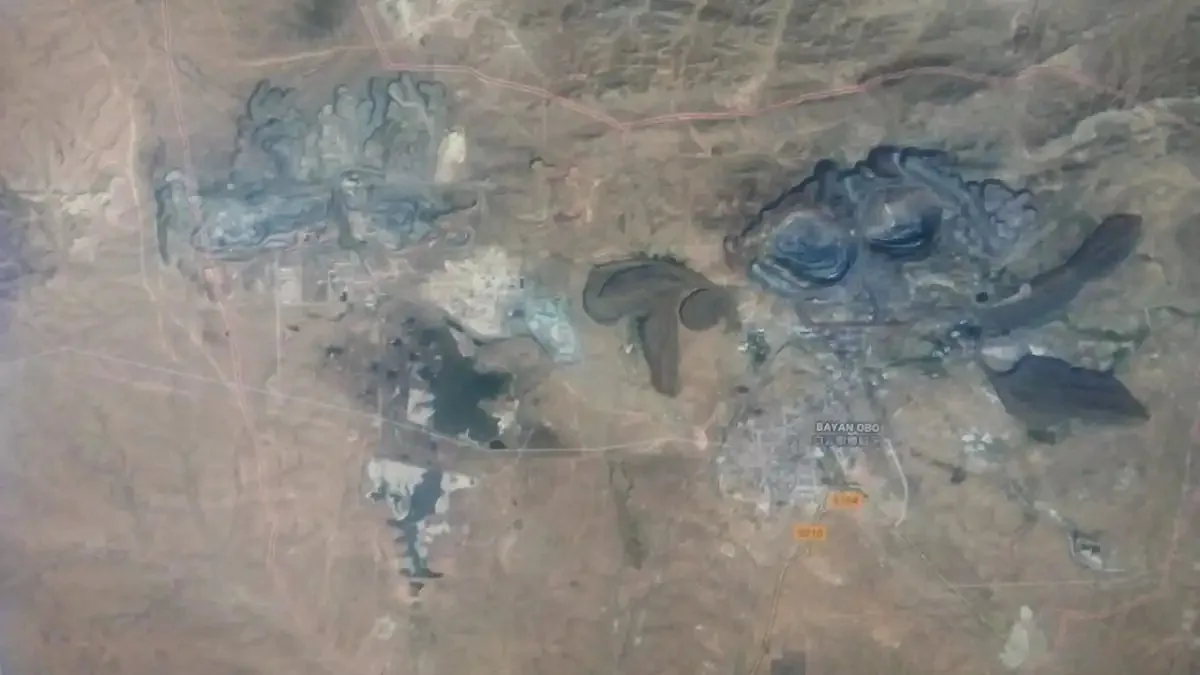
China built expertise, scale, supplier networks and customers across this entire chain over several decades, supported by state policy and by its manufacturing industries. Its largest deposit, Bayan Obo in Inner Mongolia, is one of the biggest in the world, and its ionic clay deposits in the south are an important source of heavy rare earths. Material from other countries, including Myanmar, has often been sent to China for processing.
The result is an ecosystem that competitors cannot reproduce simply by opening a mine.
The 2010 warning
In 2010, during a diplomatic dispute between China and Japan over a collision near disputed islands, Japanese companies reported that rare earth shipments from China had stalled. Around the same time China tightened export quotas, and rare earth prices rose sharply.
The episode alarmed manufacturers worldwide. It encouraged recycling research, more efficient use of rare earths, new magnet designs and new mining projects. It also showed how slowly alternative supply chains develop: many of the projects announced in that period never reached production, and the market’s dependence on China remained.
Export controls return
Concern resurfaced in the 2020s as China restricted exports of rare earth processing technology and, in 2025, placed export controls on several medium and heavy rare earths and related products. Each step reminded buyers that a supply chain can be vulnerable even when the minerals themselves are not geologically scarce.
Diversification beyond the mine
Mines outside China do exist. Mountain Pass in California, operated by MP Materials, is a major producer, and Lynas mines in Western Australia and processes in Malaysia and Australia. Other projects are under development in North America, Europe, Africa and elsewhere.
But real resilience needs more than ore. A credible alternative supply chain needs separation plants, waste management, metal and alloy production, magnet factories, customers willing to sign long-term contracts and finance at every stage. Each stage must operate at a scale compatible with the next. Replacing one concentrated link while leaving the others unchanged does not create an independent chain.
That is why government strategies in the United States, the European Union, Japan and Australia increasingly focus on processing and magnet manufacturing rather than celebrating new discoveries alone.
Qualification takes time
Even when a new producer exists, customers cannot switch overnight. A magnet maker or car manufacturer has to qualify a new supplier, testing that its material consistently meets tight chemical specifications, before reorganising a critical product around it. That process can take years, and it is one of the least visible reasons diversification is slow.
At a glance
| Item | Detail |
|---|---|
| Group | 17 elements: the lanthanides plus scandium and yttrium |
| Key products | Permanent magnets, catalysts, phosphors, alloys |
| Main bottleneck | Separation and refining |
| Dominant country | China, across most of the chain |
| Major producers elsewhere | United States (Mountain Pass), Australia (Lynas) |
| Common mistake | Treating all rare earths as interchangeable |
Frequently asked questions
Are rare earths actually rare?
Many are fairly common in the earth’s crust. What is rare is finding them in deposits that can be mined and separated economically.
Why does China control rare earths?
Because it built the entire chain, from mining to separation to magnet making, over decades, and became the cheapest and most capable producer at almost every stage.
Can a new mine end dependence on China?
Not by itself. Separation, metal production and magnet manufacturing also have to exist outside China for a supply chain to be independent.
Can recycling replace rare earth mining?
Recycling, especially of magnets, can become an important source, but collection, product design and separation limit how quickly it can meet growing demand.
Sources and further reading
Photo: Squishyhippie, CC BY-SA 4.0, via Wikimedia Commons.