Short answer: On 20 November 1980, an oil drilling rig on Lake Peigneur in Louisiana accidentally punctured the roof of the Jefferson Island salt mine below. Lake water poured into the mine, dissolved the salt around the hole and drained the lake within hours, pulling in the rig, barges and land. Everyone working underground escaped, and no one was killed. The salt mine was lost for good.
It is one of the strangest industrial disasters in modern history. In a single day, a shallow freshwater lake in southern Louisiana drained into a salt mine beneath it, swallowed a drilling rig and a string of barges, reversed the flow of a canal and turned itself into a deep saltwater lake. And despite the scale of what happened, every miner underground walked out alive.
The lake, the mine and the drill
Lake Peigneur lies near New Iberia, Louisiana, above the Jefferson Island salt dome, a massive column of rock salt that rises close to the surface. Before 1980 the lake was shallow, only a few metres deep, and popular for fishing.
Beneath it, the Diamond Crystal Salt Company operated the Jefferson Island mine, a large room-and-pillar salt mine with chambers extending under the lake. At the same time, a drilling rig working under contract for Texaco was exploring for oil from a platform on the lake. On the morning of 20 November 1980, the drill bit penetrated into the mine workings.
How a small opening grew
The first hole was small. What made it catastrophic was a simple fact of chemistry: water dissolves salt.
Once freshwater from the lake found a path into the mine, it began dissolving the salt walls of the borehole and the mine chambers around it. The opening grew, more water flowed in, the opening grew faster, and the process fed on itself. Within hours the connection had become a large crater, and the lake was draining into the mine through a whirlpool.
The drilling rig tipped and disappeared. So did a number of barges moored on the lake, along with trees, a parking lot and part of a nearby botanical garden on Jefferson Island. Some of the barges later bobbed back to the surface as the mine filled and air was forced out.
The canal ran backwards
Lake Peigneur was connected to the Gulf of Mexico through the Delcambre Canal. As the lake level dropped, the canal’s flow reversed. Instead of draining towards the Gulf, water rushed from the canal into the emptying lake, creating a temporary waterfall that was reported as the tallest ever seen in Louisiana.
The inflow from the canal eventually refilled the lake, but with salt water from the Gulf system. A shallow freshwater lake became a much deeper saltwater lake in parts, with a changed ecology that it keeps today.
Why no miners died
The spectacle tends to dominate retellings, but the most important fact about Lake Peigneur is human. When water began entering the mine, workers underground recognised the danger, raised the alarm and followed the evacuation procedures. Everyone working in the mine at the time, around fifty people, reached the surface. The crew of the drilling rig also escaped before it went under.
Mine emergencies are governed by escape routes, communication and the time available before workings become inaccessible. At Lake Peigneur, all three worked. A loss that destroyed the mine did not become a loss of life.
What went wrong
Investigations and lawsuits followed, and the exact cause was disputed. The central issue was the relationship between the drilling location and the mine’s underground map: the drill should not have been where it was relative to the mine workings, whether because of a survey error, a mapping error or a communication failure between the two operations.
Texaco and its drilling contractor eventually paid compensation to the salt company and to others affected, without the details of fault ever being fully settled in public.
What the disaster teaches
Lake Peigneur remains a textbook example in mining and engineering courses for three reasons. Surface drilling and underground maps must share a reliable coordinate system, and both sides must know where the other is working. Old workings and uncertain surveys can turn a small location error into a disaster. And water and soluble rock interact in ways that accelerate, so a minor breach can become a total failure very quickly.
What happened afterward
The Jefferson Island salt mine never reopened. The salt dome beneath the lake was later used for natural gas storage. The lake itself refilled and remains, deeper and saltier than before, with the botanical gardens at Jefferson Island still open nearby.
At a glance
| Item | Detail |
|---|---|
| Date | 20 November 1980 |
| Place | Lake Peigneur, near New Iberia, Louisiana, USA |
| Mine | Jefferson Island salt mine, Diamond Crystal Salt Company |
| Trigger | Oil drilling punctured the mine roof |
| Human toll | Everyone escaped; no human deaths |
| Lasting effect | Mine lost; lake refilled as a deeper saltwater lake |
Frequently asked questions
What happened at Lake Peigneur?
An oil drilling rig punctured a salt mine beneath the lake. Water rushed into the mine, dissolved the salt and drained the lake within hours.
Did anyone die in the Lake Peigneur disaster?
No people were killed. Everyone working in the mine and on the drilling rig escaped.
Did Lake Peigneur disappear permanently?
No. It drained into the mine and then refilled from the canal, but it became deeper in parts and salty instead of fresh.
Was the salt mine reopened?
No. The flooded workings were lost, and the event ended mining there.
Sources and further reading
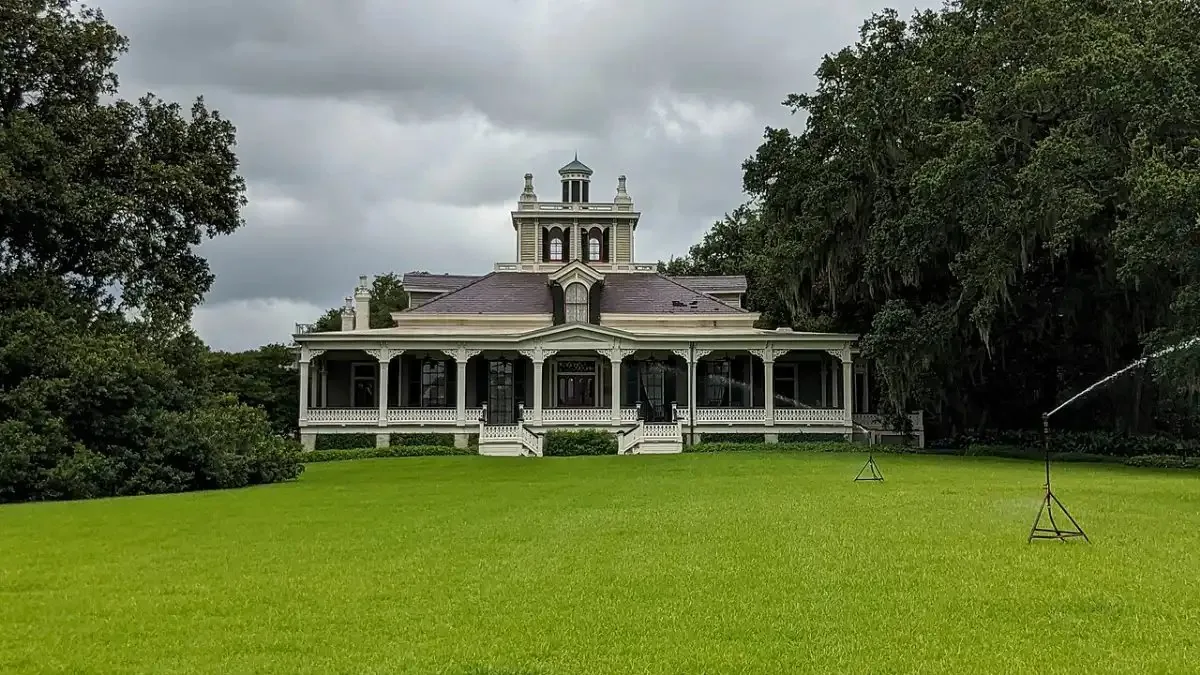
Photo: Bart Everson, CC BY 2.0, via Wikimedia Commons.