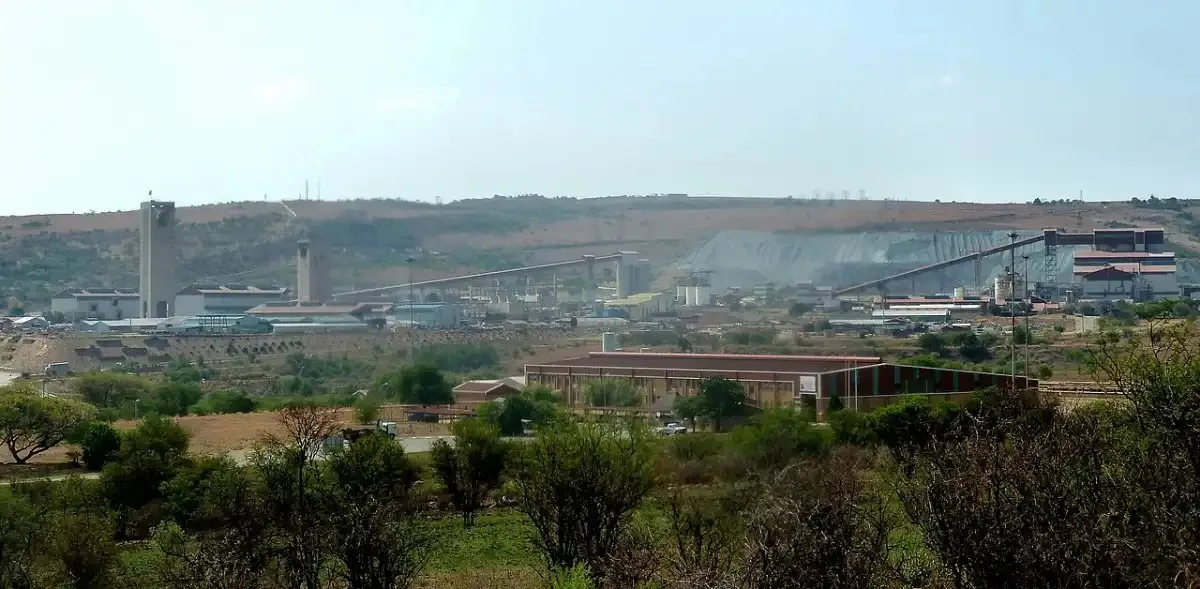
Short answer: The deepest mine in the world is Mponeng, a gold mine in South Africa operated by Harmony Gold, with workings that extend more than four kilometres (about 2.5 miles) below the surface. At that depth the rock is hot enough to make work impossible without refrigeration, and the pressure of the rock above creates a constant risk of seismic events.
Mponeng is generally recognised as the deepest operating mine in the world. At the bottom of its workings, miners are more than four kilometres below the surface, in an environment that humans can work in only because of continuous engineering: chilled air, ice, ventilation and constant monitoring of the rock around them.
Where Mponeng is
Mponeng lies on the West Wits line near Carletonville, southwest of Johannesburg, in a region whose gold reefs have been mined for more than a century. It was operated for many years by AngloGold Ashanti and was acquired by Harmony Gold in 2020. Its neighbour, TauTona, held the depth record before Mponeng’s workings went deeper.
The reason anyone mines at such depth is the ore. The Witwatersrand Basin contains some of the richest gold deposits ever found, and the reefs that remain dip steeply into the earth. Following them means going down.
What “deepest” measures
Depth records need a definition, because “deepest” can mean several things:
- The deepest working level below the surface, where mining actually takes place.
- The depth of a single vertical shaft.
- The elevation below sea level.
- The deepest point reached by an exploration borehole.
Mponeng’s record refers to active workings below the local surface. It should not be compared with a borehole such as the Kola Superdeep Borehole in Russia, which reached more than 12 kilometres but was a scientific drilling project a few inches wide, not a mine where people work. ResourceClips uses the deepest active mining depth below the surface, and that depth changes as the mine develops.
Heat becomes an engineering system
Rock temperature rises with depth. At Mponeng’s deepest levels the rock itself can reach around 60 degrees Celsius (140 degrees Fahrenheit), far beyond what anyone can work in safely.
Making the workings habitable is a large industrial operation in its own right. Refrigeration plants on the surface and underground chill water and air. Ice slurry is pumped down to absorb heat close to where people work. Ventilation moves enormous volumes of air through the tunnels. The system has to remove heat not only from the surrounding rock but also from machinery, broken ore and the people themselves. Without it, the mine would stop within hours.
Pressure and seismicity
The weight of four kilometres of rock creates immense stress around every excavation. When miners remove ore, that stress is redistributed, and the rock can fail suddenly in what the industry calls a rockburst or seismic event. In deep South African mines these events are one of the main hazards.
Mine layout, the sequence in which ore is extracted, rock support and continuous seismic monitoring are therefore central both to safety and to how much ore can be recovered. Deep mining is as much about managing stored energy in the rock as about breaking it.
The economics of a long descent
Every person, piece of equipment and tonne of ore has to travel kilometres through shafts and tunnels. The journey from the surface to the deepest working areas can take an hour or more, which reduces the productive time of every shift. Power, water, compressed air, cooling and communications all have to reach the workings, and every service becomes more expensive with depth.
High-grade ore can justify that extraordinary engineering, but depth magnifies cost and operational risk. That is why the deepest mines are almost all gold mines: few other metals are valuable enough per tonne to pay for the descent.
Could mines go deeper?
Technically, yes. Engineers have studied mining at five kilometres and beyond. The question is whether it would be economic. Heat, rock stress, ventilation, travel time and capital cost all increase with depth, and at some point the gold recovered no longer pays for the system needed to reach it. The limit of deep mining is set less by what is possible than by what is worth doing.
Other deep mines
Several other South African gold mines in the same basin, including TauTona and Driefontein, reach depths of three to four kilometres. Outside South Africa, some base metal mines in Canada, such as Kidd Creek in Ontario, extend below three kilometres. None of them currently exceeds Mponeng.
At a glance
| Item | Detail |
|---|---|
| Mine | Mponeng |
| Country | South Africa |
| Operator | Harmony Gold |
| Commodity | Gold |
| Depth | More than 4 km (about 2.5 miles) below surface |
| Main challenges | Heat, rock pressure and travel time |
Frequently asked questions
What is the deepest mine in the world?
Mponeng, a gold mine near Carletonville in South Africa, with workings more than four kilometres below the surface.
How deep is Mponeng?
Its deepest workings extend more than four kilometres below the surface. The exact active depth changes as the mine develops.
How hot is it at the bottom of the deepest mine?
The rock can reach around 60 degrees Celsius. Refrigeration, ice and ventilation bring working areas down to temperatures people can work in.
Is the Kola Superdeep Borehole deeper than Mponeng?
Yes, but it is a narrow scientific borehole, not a mine. Nobody works at its depth.
Sources and further reading
Photo: JMK, CC BY-SA 4.0, via Wikimedia Commons.