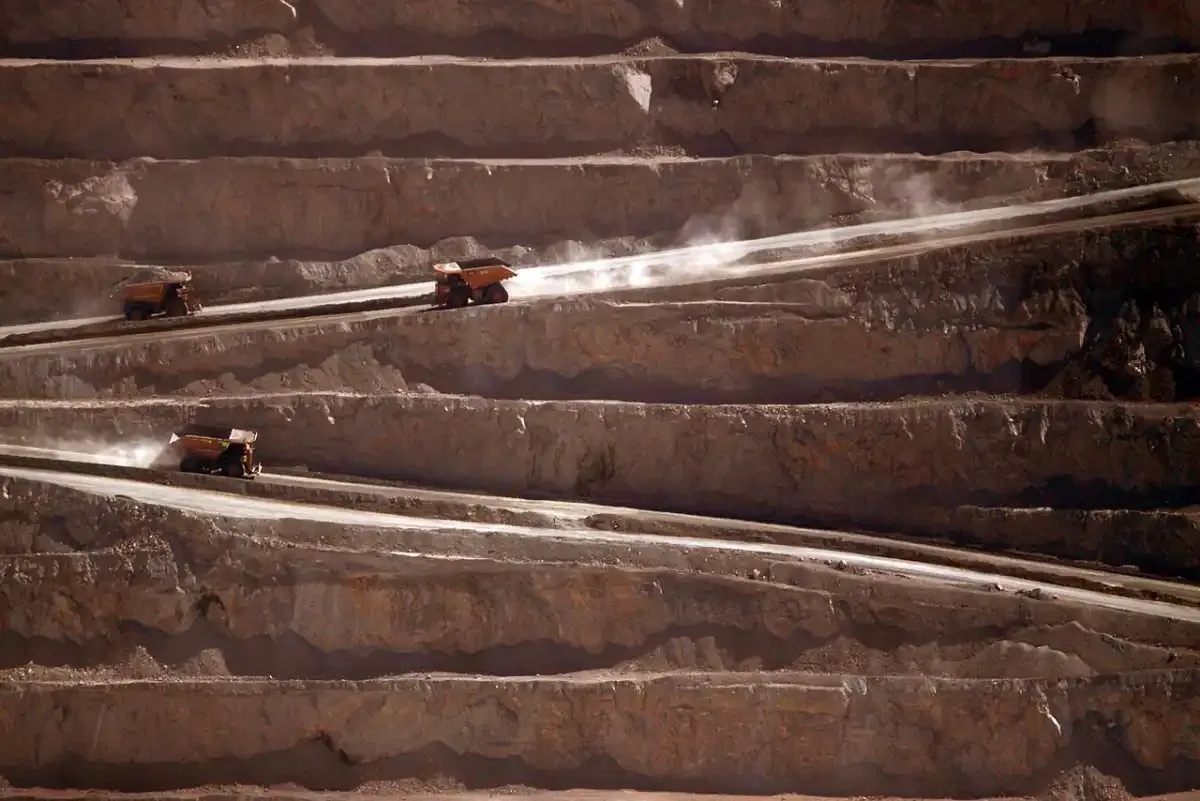
Short answer: Escondida, in the Atacama Desert of northern Chile, is widely described as the world’s largest copper mine by production. It is operated by BHP, which owns the majority stake, with Rio Tinto and a Japanese consortium as partners. The complex sits more than 3,000 metres above sea level, combines several open pits with large processing plants, and depends on desalinated seawater pumped up from the coast.
Escondida means “hidden” in Spanish, but there is nothing hidden about its place in the copper market. In most years it produces more copper than any other single mine, and changes at this one site, from a strike to a drop in ore grade, can be felt in the global copper balance.
Where Escondida is
The mine lies in the Antofagasta Region of northern Chile, about 170 kilometres southeast of the port city of Antofagasta, at an altitude of more than 3,000 metres. It sits in the Atacama, one of the driest deserts on earth.
Escondida began production in 1990. BHP operates it and holds the majority interest, Rio Tinto holds a significant minority stake, and a group of Japanese companies holds the rest. Chile is the world’s largest copper producer, and Escondida is the single most important operation in the country.
What makes Escondida so large
Escondida’s scale comes from its geology and from the system built around it. The deposit is a porphyry copper deposit: a huge body of rock with relatively low concentrations of copper spread through it. Mining it profitably means moving enormous volumes of rock efficiently.
The complex includes more than one open pit, fleets of large haul trucks and shovels, several concentrator plants for grinding and flotation, leaching facilities, pipelines, power supply and port infrastructure at Coloso on the coast. No single part makes the mine large. The size comes from the whole system working together, every day.
Concentrate and cathode are different products
Escondida produces copper in two forms, and the difference matters.
Sulfide ore, which makes up most of the deposit, is crushed and ground into a fine powder. Flotation then separates copper minerals from waste rock to produce copper concentrate, which typically contains around a quarter to a third copper. The concentrate travels by pipeline to the coast and is shipped to smelters and refineries, mostly in Asia.
Oxide ore and some lower-grade sulfide material are treated differently. They are leached with acid, and the copper is recovered by solvent extraction and electrowinning, which produces copper cathode: sheets of nearly pure copper that can be sold directly to manufacturers. Changes in the type and grade of ore being mined shift the balance between the two routes.
Water in the driest desert
A mine that processes huge volumes of ore needs a great deal of water, and in the Atacama water is scarce and contested. For years Escondida drew on aquifers in the high desert, which raised concerns about effects on fragile ecosystems and other users.
The mine invested heavily in seawater desalination at the coast and in the pipelines and pumps needed to lift that water more than 3,000 metres to the mine. The shift has greatly reduced its reliance on continental water. It has also made energy and coastal infrastructure more important, since pumping water uphill over that distance takes a large amount of power. The trade-off shows why the environmental performance of a mine has to be judged across all its connected systems, not just at one point.
Why the mine matters globally
Because Escondida produces such a large share of world copper supply, events there move markets. Labour negotiations have been followed closely by traders, and a long strike in 2017 noticeably tightened global supply. Declining ore grades, maintenance shutdowns and expansion projects all affect output from year to year.
Copper is essential to electrical grids, buildings, vehicles and electronics, and demand is expected to grow with electrification. That makes the performance of the largest existing mines, Escondida first among them, a matter of interest well beyond Chile.
Why rankings move
“Largest copper mine” can mean different things. Escondida leads by copper produced in most years. Other mines lead other measures: Bingham Canyon in Utah is famous for the size of its excavation, and some mines have larger resources but lower output. Ore grades decline over time at most mines, and expansion projects elsewhere can change the order. A careful ranking states which measure and which year it uses.
At a glance
| Item | Detail |
|---|---|
| Mine | Escondida |
| Location | Atacama Desert, Antofagasta Region, Chile |
| Operator | BHP (majority owner) |
| Partners | Rio Tinto and a Japanese consortium |
| Commodity | Copper |
| Products | Copper concentrate and copper cathode |
| Production began | 1990 |
Frequently asked questions
What is the largest copper mine in the world?
By production, Escondida in Chile in most years. Other mines lead by different measures, such as the size of the excavation or the resource.
Who owns the Escondida mine?
BHP operates it and holds the majority stake. Rio Tinto and a Japanese consortium own the remainder.
Is Escondida one pit?
No. It is an integrated complex with more than one open pit and several processing plants.
Where does Escondida get its water?
Mostly from desalinated seawater pumped from the coast, which has reduced its use of desert aquifers.
Sources and further reading
Photo: Municipalidad de Antofagasta, CC BY 2.0, via Wikimedia Commons.